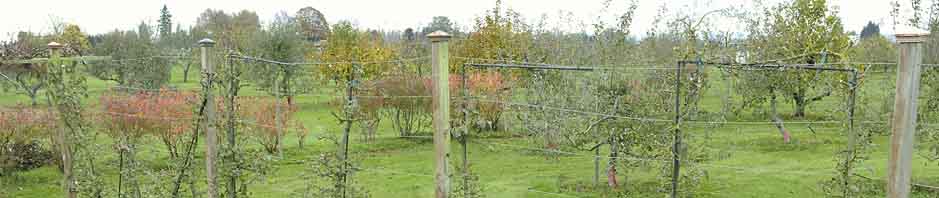
(Located W1, J4) Our Nursery is an area surrounded by fencing. The metal one inch square mesh fence is three feet deep in the ground and three feet above the ground. The underground fence keeps voles from getting in and eating the roots of the new trees and the above ground fence keeps rabbits and other animals out. We have sprinklers to water our plants.
The nursery has several purposes in our fruit garden:
Interesting Plants in the Nursery
The plants we are growing in the nursery change from year to year. Here are a few of what we were growing in 2025 and 2026.
Gravensteins We are growing on EMLA 27 rootstock, two each of the 15 Gravenstein strains we have. This is because the old planting has a lot of anthracnose and may need to be redone.
Heritage Apples: We have grafted 9 unique Northwest heritage apple varieties onto the very dwarfing M27 rootstock to eventually plant on the west trellis. We also have noticed a few heritage varieties on the inner oval of the fruit garden are not growing well and we have budded new trees on the semi-standard M111 rootstocks to replace them.
Karmijn de Sonnaville Our favorite apple in the garden, but because of anthracnose they may need replanting. We have new ones getting ready on EMLA 26 rootstocks.
Peaches We are budding new leaf curl resistant peaches because some in the garden have been ruined by a missed spray in a wet year.
Malus fusca We have successfully grafted both apples and pears onto our native swamp crab apple to show how people with very wet soils can successfully grow apples. Persimmons We have great persimmon cultivars that will ripen in our area but the trees we bought were very small and need a couple of years in the nursery before planting into the garden.
The Nursery Provides the Fruit Garden with new trees
We take out existing trees from the fruit garden for several reasons. The tree could be diseased or damaged. Or we might already have several trees of the same variety and want to make room for new varieties. Or a variety that we thought to be great didn’t do well in the garden. We are often adding new interesting fruits to our garden to show the public what will grow well in our area. These new trees most often come out of our nursery.
Making new trees
When we buy a new tree or make one, the tree or bush is often too small to plant out in the fruit garden. It may not have the root system to at first compete with the grass and weeds in the fruit garden. So we grow it in the nursery until it is big enough to successfully grow in our fruit garden.
We make new trees in several ways.
Budding: We will, in the winter, plant rootstock a foot apart in the nursery and let them grow until August when we slip in a bud from a variety we want to grow. Or we “bench graft” a dormant variety of “scionwood” in the winter onto a rootstock and plant it about a foot apart in the nursery. Either way, we grow the new tree for two or three years in the nursery before planting it in the fruit garden. We teach these grafting techniques in hands-on classes.
The stool bed
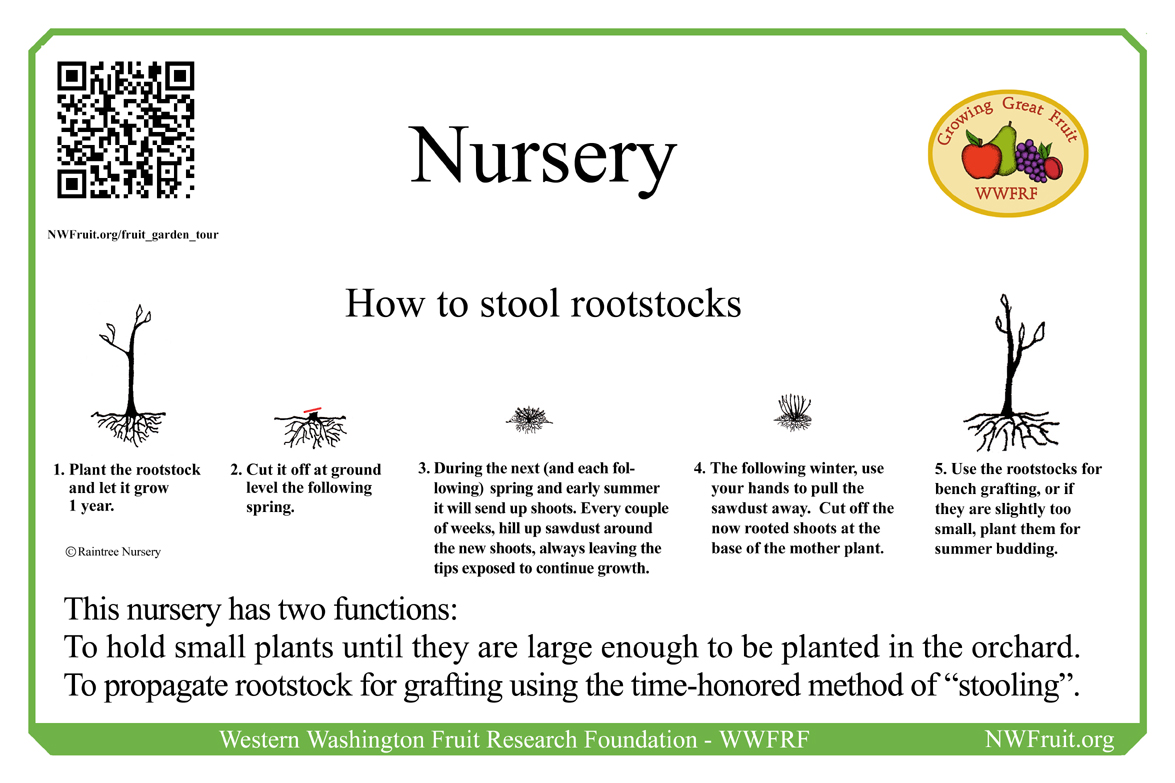
The diagram on the sign explains how we make our own rootstocks in a “stool bed”. Like fruit cultivars, rootstocks have also been selected for hundreds of years. We have many different types of rootstocks in our nursery and each produces a different size of dwarf tree each with its unique characteristics. Cutting the rootstocks off at ground level each year each produces many new shoots called “suckers” that produce roots which we harvest to have our own rootstocks. We also purchase rootstocks to graft on to. Apples, Plums, Quinces and Cherries will produce rootstock in a stool bed. Old Home x Farmingdale Pear rootstocks are grown instead from rooted cuttings.
Why can’t we make a new identical tree by just planting a seed? Apple trees and most other fruit trees don’t come “true” from seeds because every seed has two parents and each of the seed off-spring are genetically different.We make new trees by grafting varieties we want onto dwarfing rootstocks.
If you, for instance, planted an apple seed it would be very unlikely to produce a tree with good tasting fruit and it would produce a tree that could grow to 40 feet tall. It usually takes tens of thousands of seedlings to get one superior variety. So, the only way to reproduce a specific apple variety is to take a branch from that variety, called a “scion” and graft it onto an apple root.