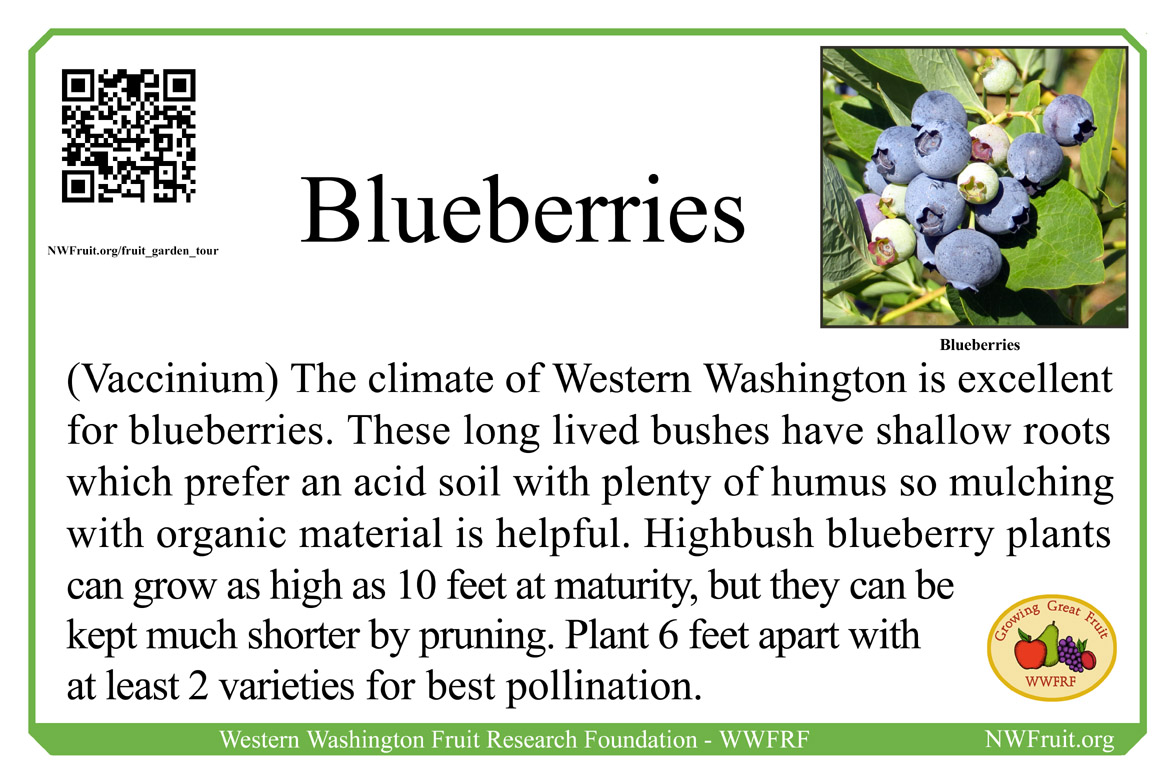
(Located in W5 and E5 most planted in 2002) WWFRF has 121 bushes with 33 varieties. Most of which were planted in 1995 and moved to our garden in 2002. Plant longevity has been maintained through drip irrigation, mulching (we are using hog fuel), and aggressive pruning.
Blueberries have shallow-roots growing in the upper 18 inches requiring open, porous soil with a pH between 4 and 5. Most soils in Western Washington are sufficiently acid for blueberries. If soil is not acidic enough fertilization can help; ammonium sulfate is a fertilizer that can be useful. Planting several varieties for cross-pollination will result in larger, earlier fruit. The Northern Highbush and half high (a hybrid of northern high bush and low bush plants) varieties are suited for the Western Washington climate. Regular watering is important in the typical dry Pacific Northwest summer weather.
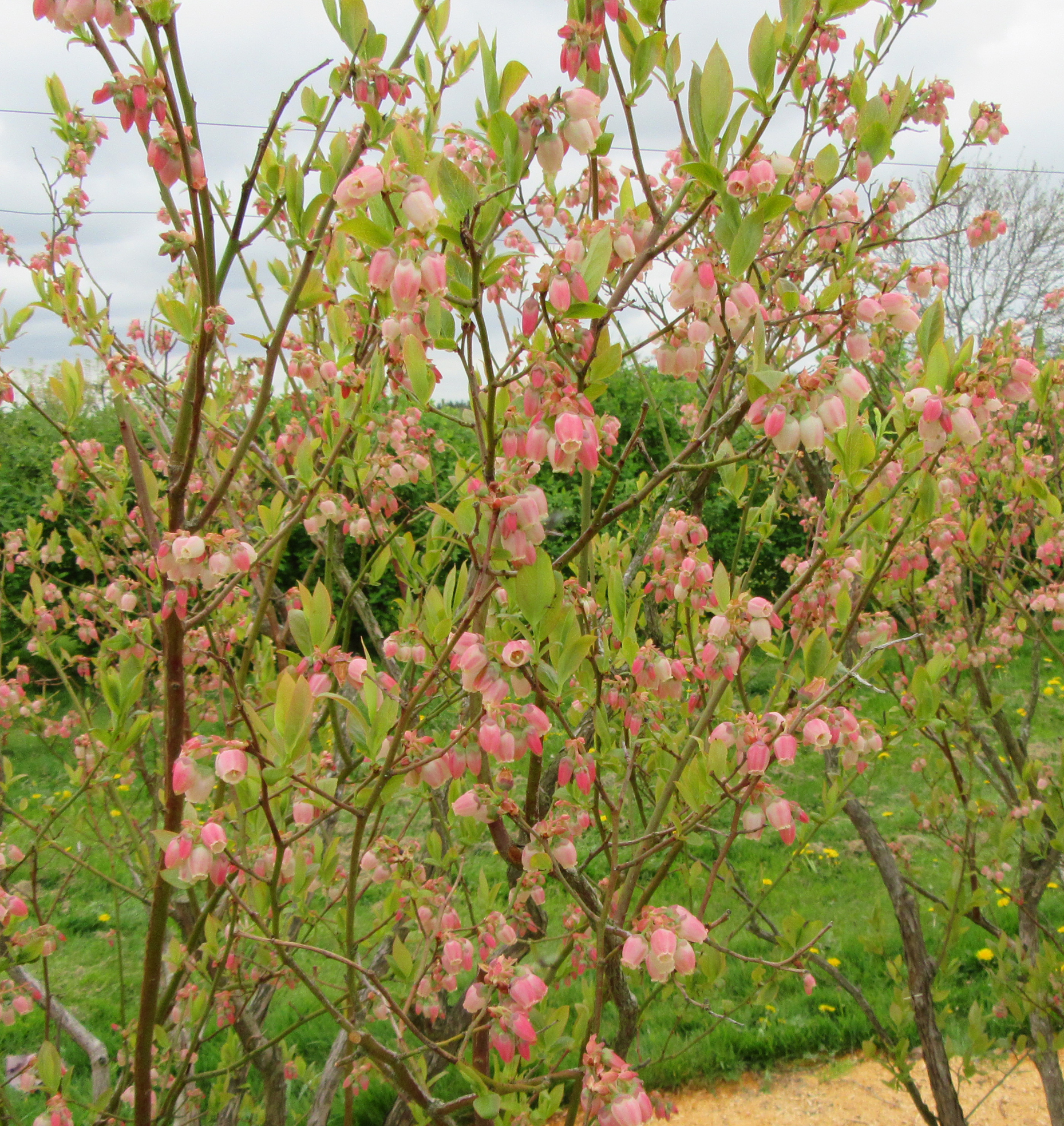
How to Plant Blueberries
When buying a plant at a nursery we have found it’s best to start with a larger plant with at least a few branches coming from the root ball (about 2 years old). Planting should take place in the fall or winter when the plant will have no issues with heat. Planting bare root bushes in February or March works well in Western Washington. Place wood chips on top of the soil around the new bush to maintain moisture. If a large older bush is available for transplanting it would be best to choose a plant with at least 6 branches coming from the roots (needed for future puning) and to look for a bush with fewer gray peeling branches. Branches that are larger diameter, gray and peeling are older and can be less productive. When transplanting large bushes do it in winter if possible, while the plant is dormant. Be gentle with the root ball when it is dug out. Make sure the dirt is well packed around the roots and add plenty of water to the soil after planting. Add wood chips as a compost on top of the soil to maintain moisture.
The first year or two after planting remove all flowers to allow the plants to settle into their new home. Since blueberries flower on 1 year old wood renewal pruning is needed for best size and flavor. After the bush is mature several older branches are cut down to the ground each year. Twiggy growth should be removed each year. Later in the summer after harvest choose the strongest new shoots to be replacements for the older branches by removing the weak and small shoots.

Blueberries are great in the Edible Landscape
Blueberries are a great addition to a garden with fruit production and aesthetics in mind, since they provide great fall leaf color (reds, purples, oranges and yellows) and winter color in that the branches can be brightly colored as well (reds and bright green). There are many varieties so there are options for fruit from late June through late August. The early blooming/fruiting varieties are helpful to native pollinators during colder spring months when other plants are not blooming yet. Finally there are a variety of sizes of mature plants among the varieties (native and dwarf types, half high and northern/southern highbush) so that a gardener can pick a size that works for their space.
This is is a good YouTube video to learn about blueberry pruning.
Here is complete list of descriptions in alphabetical order: