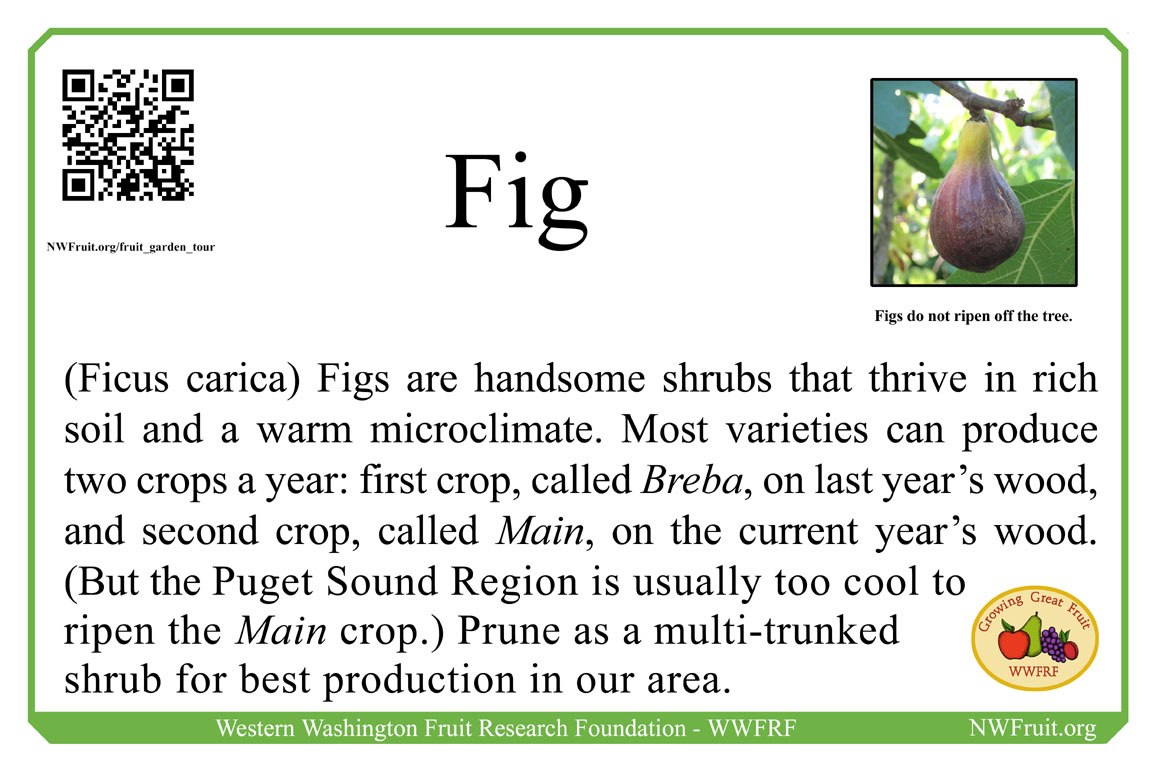
(W3, F14 planted 2024) Our climate is conducive to successfully growing delicious figs but only if you choose the right varieties and niches in your garden. Choose the sunniest, warmest corners of your yard, maybe warmed by being near a heated house. While figs can get to be beautiful tropical looking large trees, often keeping them cut back and shaped in an open or even fan shape will keep all your figs at a height where you can pick them.
The nearby ocean protects us, most of the time, from winter temperatures below 10 degrees F. which will kill back fig trees to the ground. We put chicken wire and straw or chips around the base of our plants when they are young to protect them from those hard freezes. With protection around the base, even if the unprotected part dies back, it will very quickly regrow from the base and your plant will soon again be productive.
The coastal influence that moderates our winter temperatures also mean that we do not get the summer heat units found in most of the nation that are needed to ripen a fall crop. So we are looking for cultivars with a very early ripening fall crop. However most figs also produce an overwintering “breba” crop. These tiny pea size fruit over winter, next to a leaf bud and the breba crop ripens here, usually in August. So we are trialing cultivars noted for a heavy “breba” crop.
San Pedro Figs
Alas there is a unique type of fig called a “San Pedro” fig that without pollination from a wasp, that we do not have, only produces a “breba crop”. Without pollination, what would be the fall crop never ripens. For years our region’s most reliable and tasty fig has been the Desert King which is a San Pedro fig. So we have other San Pedro type figs to try.
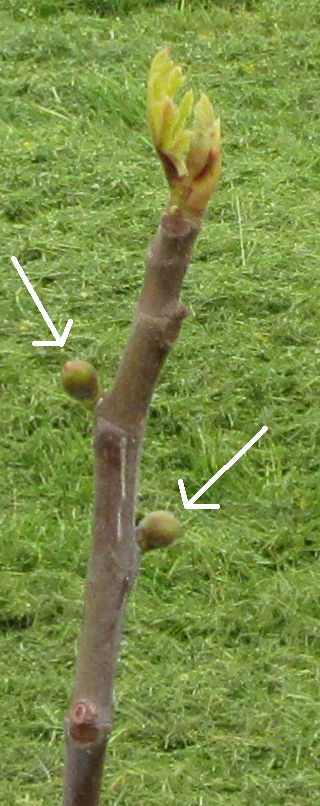
Fig Pruning
Prune about 1 out of every 3 limbs back to, or nearly back to, its source each spring to encourage renewal growth. The new shoots forced to grow as a result of pruning will produce their Breba crop the following year. Figs taste best if picked when soft to mushy and drooping straight down. Some figs are green when ripe and others are darker.
Photos of figs and fig pruning
The latest fig trial at WWFRF was initiated in the spring of 2024 with 9 different fig varieties. In the spring of 2025 another 9 different varieties were planted in the adjoining row. The goals of the trial are to:
- Identify varieties of productive, good tasting figs for western Washington.
- Identify appropriate growing and pruning techniques to maximize fruit yield.
- Identify appropriate over-winterizing techniques for figs in western Washington.
The varieties in the Fruit Garden trial are: